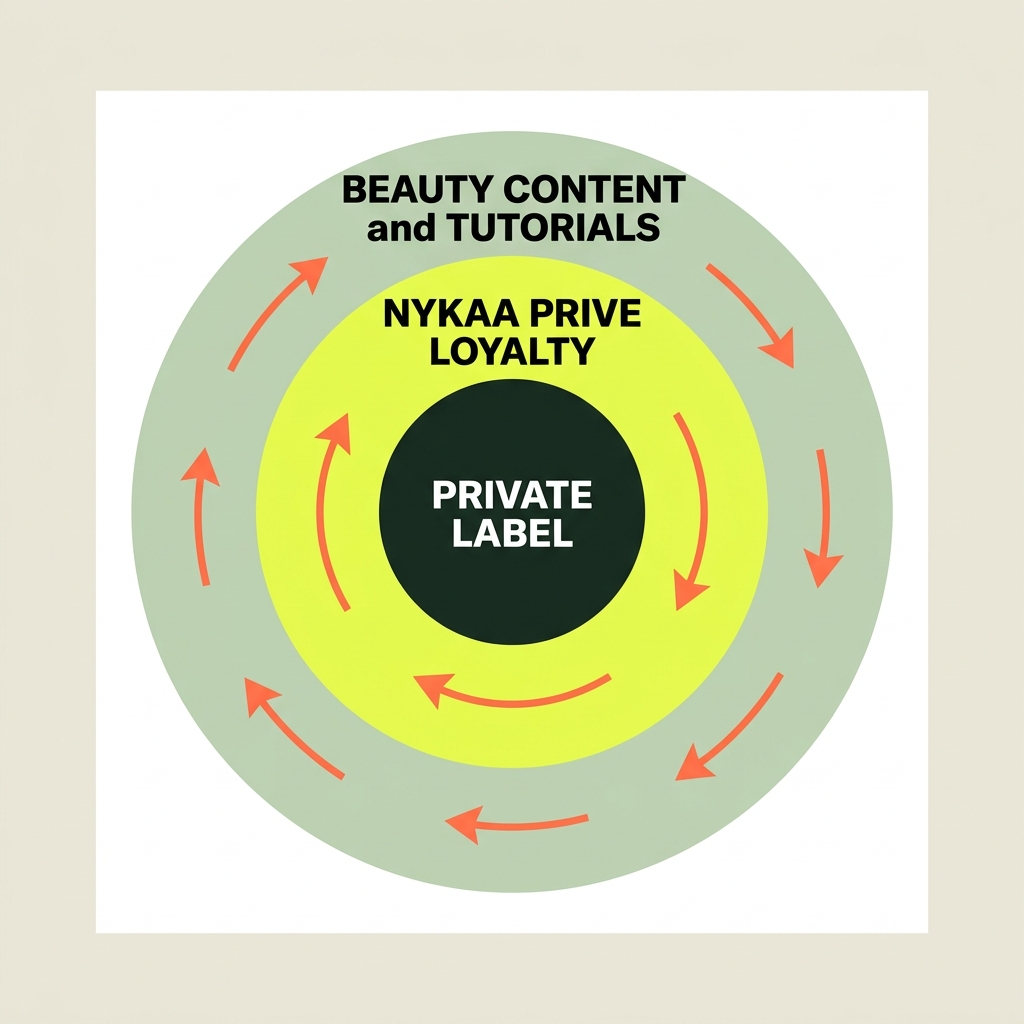
The three-layer system
Nykaa operates at three connected layers. First, it publishes editorial beauty content — tutorials, trend reports, ingredient guides and product comparisons — through the Nykaa app, its YouTube channel and Nykaa TV. This content brings users into the platform on days when they are not buying. Second, Nykaa Prive, its loyalty programme, converts spending into 'coins' redeemable against future purchases. Third, Nykaa's private-label beauty brands — Nykaa Cosmetics, Kay Beauty and others — earn a higher margin per rupee than third-party branded products.
Each layer reinforces the others. Content builds category knowledge, which increases purchase confidence. Loyalty coins create a reason to consolidate spending on one platform. Private-label products are easier to recommend within content that Nykaa controls. This is our structural reading of the publicly visible business; Nykaa has not published a quantified customer-journey breakdown.
The marketing hypothesis
Beauty is a category where a shopper's confidence increases with knowledge. A customer who understands the difference between a peptide serum and a retinol product is more likely to buy, more likely to spend more, and less likely to return on the basis of a misunderstanding. Nykaa's content investment serves a commercial function: it moves customers from passive browsers to active spenders without requiring a discount.
The Prive loyalty tier structure — with escalating benefits for higher annual spend — also creates a soft switching cost. A customer with accumulated coins and tier status has a financial reason to return even if a competitor offers a lower headline price on a single product. Our interpretation is that this loyalty architecture is a retention tool as much as a rewards programme; the tier labels make the financial incentive to stay visible.
What the public evidence supports
Nykaa's annual reports confirm the existence and tier structure of Prive, the scale of its private-label revenue as a share of gross merchandise value, and the content publishing activity. These are the primary sources for structural claims in this analysis. They do not confirm the exact conversion rates between content engagement and purchase, the loyalty coin redemption rate, or which specific content format drives the most transactions. Those metrics are internal.
Nykaa's market share in Indian beauty e-commerce is frequently cited in trade and financial media; those figures vary by source and methodology. We do not use a market-share claim without a sourced, date-stamped reference. This article describes the strategy, not the competitive outcome.
A useful version for a smaller brand
A D2C beauty or personal care brand can apply this logic at a fraction of the budget. Publish one honest, useful piece of content that answers a question your category of customer searches for. Attach a simple loyalty structure to your second purchase. Introduce one own-brand product alongside third-party ones when you understand what your customers consistently buy.
- Identify the question your best customers ask before buying for the first time.
- Create content that answers it without a hard sell.
- Make the second purchase easier — not just cheaper — than the first.
A loyalty program is most defensible when it teaches customers something — not just discounts their next purchase.
Sources & notes
Source links document the campaign and reporting. Strategic interpretation is mkrting.com's own.
- Primary investor filingNykaa Annual Report 2024-25 ↗
- Primary product termsNykaa Prive loyalty programme terms ↗
- Independent reportingMint analysis of Nykaa's private-label strategy ↗
AI-assisted research and original mkrting.com analysis. Facts were checked against linked primary sources. Annual report figures are the authoritative source for financial and operational claims.
Found an error? Read our corrections policy.